This exercise is the third progression in learning the technique of the padel serve. After working on the downward racket path and then the depth of the serve, the player now incorporates the transition that immediately follows the shot.
The objective is to develop the habit of moving quickly towards the net after serving, in order to recover a good attacking position before the opponent returns the ball.
This third progression therefore connects the serve with its natural continuation: serve, move forwards immediately, then perform a split step before playing the first volley.
Technical objectives:
This exercise is the third progression in the series for learning the padel service motion.
The first exercise focused on the downward racket path and generating slice, while the second worked on serve depth to gain more time during the transition to the net.
➡️ All the progressions from the session dedicated to serve technique are available here: Padel serve technique: 4 progressions to learn the correct motion.
3️⃣ The objective of this third exercise is to develop the habit of moving quickly to the net after serving.
❌ A common mistake among beginner players is to stay in place and watch their serve instead of moving forwards immediately. This costs the player valuable time during the transition and can leave them poorly positioned for the opponent’s return.
✅ Moving quickly to the net after serving allows the player to play a comfortable, well-positioned first volley and immediately put pressure on the opponent in defence.
Setup:
The player positions themselves at the back of the court, behind the service line, in their serving position, with a basket of balls beside them.
The coach places a cone in the volley position in front of the player to mark the position they should recover after serving.
In the opposite service boxes, the coach also sets up a line of cones or markers across the court, level with the point where the glass meets the fence. This line marks the depth area worked on in the previous progression: between the cones and the back line of the service box.
How the drill works:
The player hits a deep serve, applying the technical elements developed in the previous progressions.
⏩ Immediately after hitting the serve, the player moves quickly towards the cone positioned in the volley position, without staying back to watch the trajectory of the serve.
When the player reaches the cone, they perform a split step to bring their forward movement to a controlled stop and regain a balanced position, ready to play a potential first volley.
The player then returns to the serving position using shuffle steps and repeats the sequence.
The player completes a set of 10 serve → transition to the net → split step sequences.
They then switch sides to practise the serve and transition to the net into both diagonals.
➡️ To continue learning the serve technique, the next progression is available here: Learning the padel serve: developing accuracy to target the T or the side glass.
➡️ The full session and all its progressions are available here: Padel serve technique: 4 progressions to learn the correct motion.
⚠️ Key coaching point: adapting the serving position and transition to the net
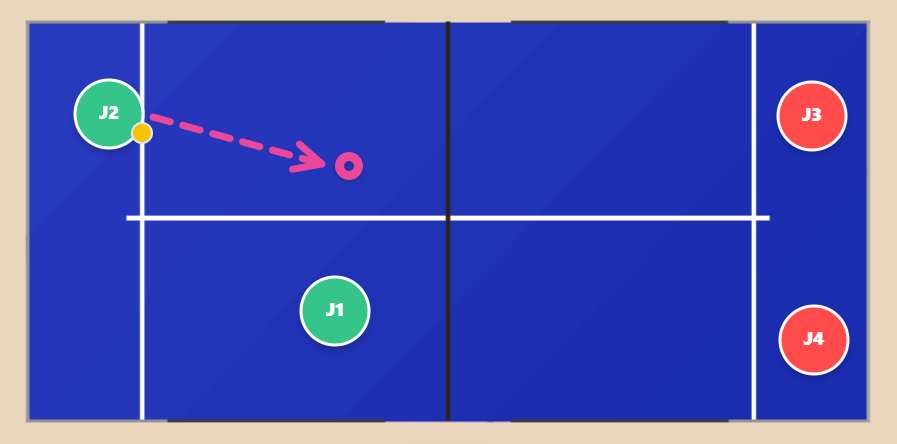
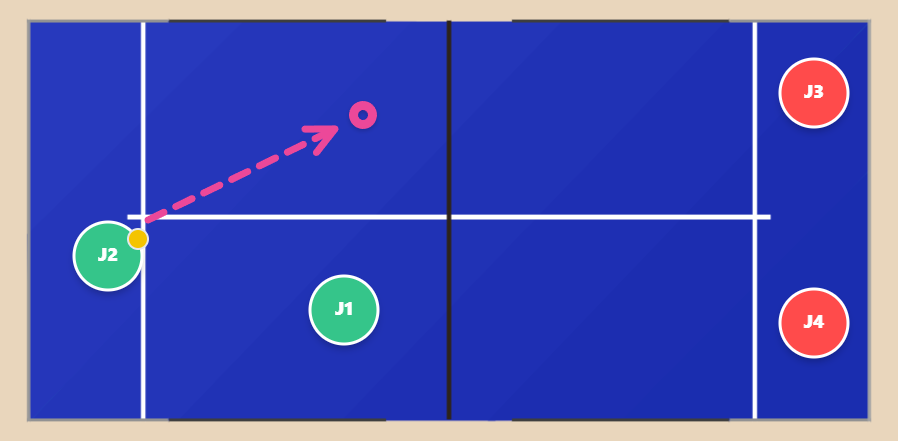
➡️ The starting position for the serve and the path taken towards the net vary depending on which side the player plays on and which diagonal they are serving into.
For a right-side player serving into the right diagonal, the player starts approximately in the middle of their service area. If they position themselves too close to the T, they leave too much space near the side glass, which the receiver can exploit.
After serving, the player therefore moves forwards on a diagonal path to close this angle and recover their position at the net.
By contrast, when a right-side player serves into the left diagonal, they position themselves closer to the T, allowing them to cover their space more quickly and easily after the serve.

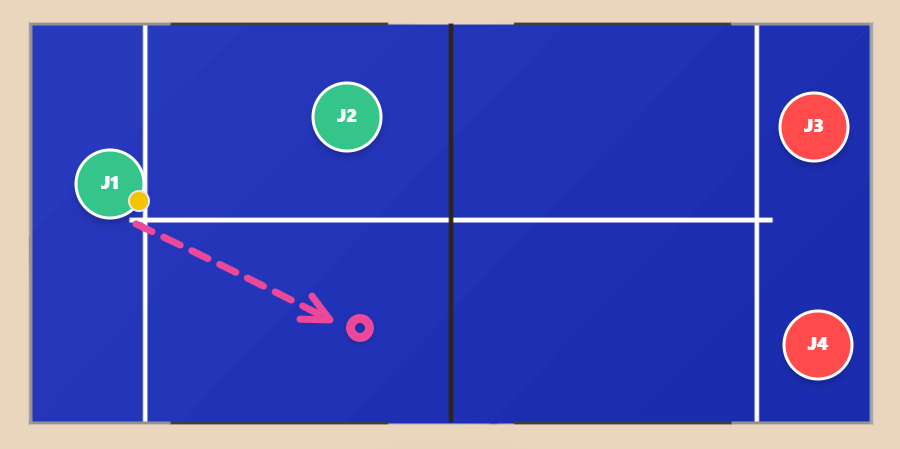
The same principle applies to the left-side player: when serving into the left diagonal, they position themselves approximately in the middle of their service area. When serving into the right diagonal, they start closer to the T.
Variation for a group of 2 to 6 players:
With several players, the coach divides them into two groups behind the two service areas.
➡️ The players take turns: each player serves, immediately moves forwards to the net and performs a split step, before making way for the next player.
After several sets, they switch sides to practise the serve and transition to the net into both diagonals.
Video credits: 👉 6 EJERCICIOS para MEJORAR el SAQUE de PÁDEL – Padelarte – YouTube