Session with a pair: complementarity and movement to cover space and anticipate the opponent
This session is designed to improve on-court complementarity within a pair, focusing on coordination and movement.
After a precision and control warm-up, the players work on two common match situations that require strong coordination: a transition-to-the-net scenario and an offensive situation.
They finish the session with a 1 versus 1 match played parallel.
1. Warm-up
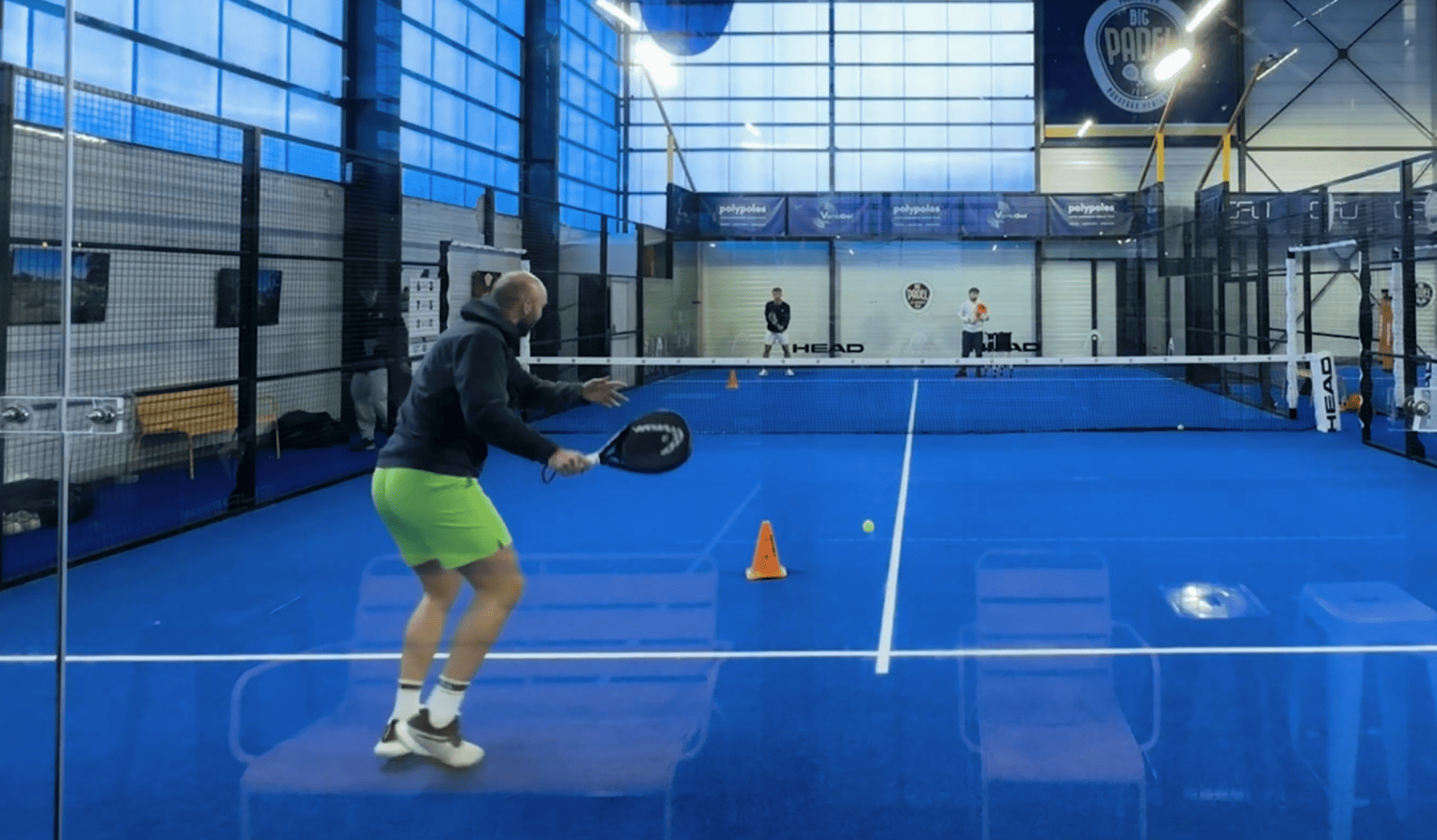
The players complete their warm-up with classic rally exchanges, with one player at the net and the other at the back of the court. The shots are always played under control, with the objective of feeling the ball.
The volley player varies the depth of their volleys so that the defender must sometimes play before the back glass and sometimes after the glass.
The players then switch roles so that each warms up in both positions.
To finish the warm-up phase, the players practice overhead shots with a few víboras, while the partner feeds lobs.
2. Technical-tactical work


3. Match sequence
To conclude the session, depending on the remaining time, add a match sequence with a parallel super tie-break (this allows players to remain on their usual side of the court).
The coach observes and analyzes the points played, correcting the players from both a technical and tactical perspective while taking notes.
At the end of the match, the coach provides individual feedback to each player, highlighting what they did well but especially identifying areas that need improvement.