Comprehensive collection of 200+ padel exercises
Filters
Number of players
1 player
2 players
3 players
4 players
Specific workshops
Volley
Defense
Bandeja/vibora
Lob
Serve
Smash
The flat finishing volley, also known as the chancletazo, is an advanced shot used to finish the point on a slightly high, floating volley. It’s a demanding shot that should be practiced regularly in training before attempting it in matches, as it’s easy to commit unforced errors…
When transitioning from defense to attack, players sometimes need to hit a volley while moving forward, before they are ideally positioned at the net — this is known as a transition volley. These two exercises focus on performing this shot with proper technique…
The first volley after the serve is decisive in dictating the dynamics of the point, and attackers can’t afford to make a mistake at the start of the point. However, changing the direction of the ball on the first volley…
The cross-court backhand volley aimed at the diagonal side fence is a shot that is often underused by players, mainly because it’s wrongly perceived as too difficult. In this exercise, we’ll see that when executed correctly…
When positioned at the net, many players tend to volley toward the defender’s back glass (glass wall no. 4), even though this is the easiest ball for defenders to return. This tactical drill prohibits volleying toward glass wall 4, encouraging attackers to target…
The most important thing on a return of serve is not to make a fault, and this tactical exercise will train the player(s) in this ability. It encourages the receiver(s) to make the opponent volley on the return of the first serve, i.e. to avoid making a fault on the return of serve by taking unnecessary risks.
This fun exercise aims to improve players’ defensive consistency on aggressive volleys. The aim of the exercise is to resist 5 aggressive volleys from the attacker during the rally by returning them with low-ball shots…
Playing very deep volleys to the back of the court and with a sliced effect gives the ball very little bounce, making these shots very difficult to defend. The aim of this exercise is to work on this volley so as to prevent the opponent from lobbing…
This exercise demonstrates a simple tactic used by many players on the pro circuit, including Paquito Navarro, to gain the advantage in the exchange from the very start of the point.
This warm-up exercise requires reactivity and intensity in the legs, as players take it in turns to fetch low balls from the net. It allows players to make short forward runs to get the heart going.
The volley duel is a frequent game situation in padel, where the 4 players find themselves at the net playing very fast volleys to finalize the point. This 2 vs. 2 exercise aims to reproduce this game situation, with the aim of automating…
This exercise suggested by coach Rodrigo Ovide helps improve reflexes, speed at the net and react quickly to incoming balls.
This 4-player exercise is a fun way to warm up for volleys, with 2 balls always in play to put the players in tension.
The volley duel is a frequent game situation in padel, where all 4 players find themselves at the net playing very fast volleys to finalize the point. The aim of this 1 vs 1 exercise is to train this situation with control…
Taught by Pablo Crosetti (one of Tapia-Coello’s coaches), this 2-on-2 physical exercise brings high volume to the deep lob. A variation is then proposed to make the exercise more complex.
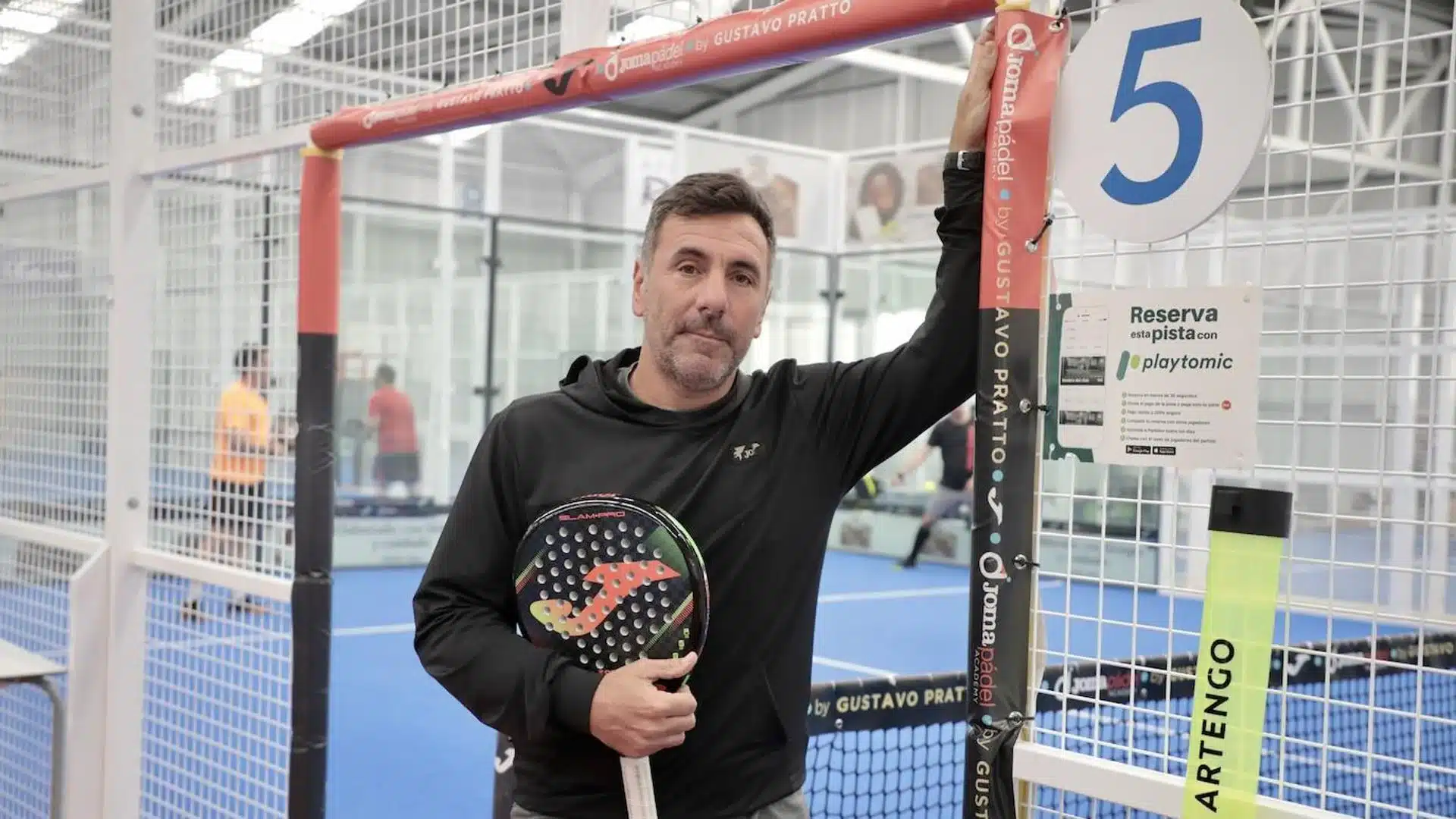
Taught by the iconic coach Gustavo Pratto at his academy, this exercise enables players to improve their decision-making on the volley. As the balls received are alternately difficult, medium and easy, the player must adapt his or her stroke to each shot. Several variations are available for this exercise.
Practiced by Juan Lebrón, this simple individual exercise combines a volley at the net with a diagonal smash to the back of the court. Very physical, it allows you to add a lot of volume to your session in a short space of time.
Used by iconic coach Pablo Crosetti, this tactical exercise aims to get used to playing sliced or lifted in the right way depending on the incoming ball.
Reaction time and reflexes are very important when volleying, as getting ahead of the ball means better positioning and volley quality. This creative exercise improves the reaction time of the player who only sees the ball coming at the last moment thanks to an obstacle placed at the net.
This situation enables you to work on your tactics, eliminating any advantage gained by serving. In this exercise, which simulates a real game, engagement is achieved by a lob. The situation is reversed compared to the usual, with receivers on attack and servers on defense.
Practised by Bela during training sessions, this exercise puts a high volume on the defense of a player in a 2-on-1 situation and with great intensity. The ban on lobbing forces players to remain in the initial configuration.
Taught by trainer Manu Martin, this exercise helps players choose which zone to shoot the bandeja or vibora into, depending on the incoming lob. The player learns to play in the zone where he won’t be fouled, and which at the same time will make it difficult for the opponent to return the ball.
A volley that’s too short allows the defending player to lob the ball, which can cause the attacker to lose the net. This exercise, taught by Rodrigo Ovide, focuses on volley depth and consistency, to keep the advantage of the point once at the net and put constant pressure on the opponent.
Practiced by Stupa in training, this classic format of alternating two movements enables you to put a lot of volume on the vibora, and above all to work on your finishing volley, a super-aggressive, difficult and risky…
This warm-up exercise is all about control: the aim is to feel the ball as you control it, and then to return it in a variety of ways, depending on the variation and level.
Taught by Pablo Crosetti to master the bajada de pared, this counter-attack on a lob that leaves the glass with height, enables you to regain the ascendancy on the point. This exercise will perfect the regularity of the gesture and the precision of the movement.
The aim of this individual exercise is to surge forward quickly after a good defense to recover the net. The player alternates between defending with low balls from the back of the court, and…
Taught by Rodrigo Casado (Gustavo Pratto Academy coach), the aim of this exercise is to learn how to use your opponent’s power by working on the blocked volley at the net. The aim of the exercise is to return the ball with control and without using power, as it arrives powerfully at the net.
Taught at the Rodrigo Ovide Academy, this 2-on-1 exercise puts a lot of emphasis on defending with low balls, and teaches players to choose the right ball to lob and recover the net. After 4 defensive low-ball shots, the defender…
When your opponent’s lob doesn’t allow you to play a vibora, it’s preferable to play an overhead shot in control, to keep your position at the net without taking excessive risks. A rulo, a slow overhead…
This complete defensive training session taught by Sarta (Martin di Nenno’s coach) consists of 4 complementary technical workshops, to be performed one after the other. They build to a crescendo in…
Practiced in training by Juan Lebrón, this classic free-play training exercise in parallel works all aspects of the game in a competitive dynamic and with great intensity.
Used in training by Miguel Lamperti and Agustin Tapia, this intense exercise simulates a free play situation on the diagonal. The set-up by the coach allows each player to orientate his role at the start, before playing the point freely in the diagonal only.
Used by the Chingotto / Galan pair, this exercise works on precise lobs to the back of the court while negotiating balls bouncing off the glass. To make this exercise more fun, you can organize a little competition between your different players, counting the successful lobs on 10 balls.
Used in training by Alejandro Galan and Axel Holm, this simple but intense exercise works both the attacker’s volley and the defender’s defense. The lob is forbidden in this situation to force a quick exchange without slowing down, and the anticipation of powerful, sustained balls for both players.
This tactical exercise enables receivers to choose the best possible shot to return a second serve that isn’t aggressive and precise enough. In this case, it’s best to work on the lob from the outset on this type of ball.
Taught by coach Gustavo Pratto (coach of the Coello / Tapia pair), this exercise trains you to play a difficult volley (chiquita return in the feet) by making the best possible decision (lob or tense volley?).
Suggested by Pablo Crosetti (one of Tapia’s coaches), this exercise involves working on your volley and adapting it to each ball: deep and powerful when moving forward, or more blocked in a more difficult situation. It also works on defending with low balls on volleys.
Taught at the M3 Padel Academy, this exercise enables you to work on a whole range of techniques. The exercise consists of alternating a vibora and a free volley 3 times, i.e. 6 balls per series. As the rhythm of the ball changes between each shot, the player must…
This exercise, taught at the M3 Padel Academy, focuses on volley reactivity and body movement during the stroke. It involves the player starting from a static position seated on a bench, standing up and taking a step to play the volley, before sitting back down…
Being patient and choosing the right moment to lob is essential in padel. This exercise will enable you to train the player to sense the right moment to lob the opponent and regain the advantage on the point.
This 2-player exercise is a perfect drill for ball control. Involving a loop of volley, remise, lob and bandeja, it allows quick adjustment before a match or during training.
Practiced by Chingotto and Gonzalez, this exercise alternates between a long volley and a drop shot volley on the same side, to force the opponent to make a quick forward run.
In padel, the lob is more of an offensive stroke than a defensive one, as it allows you to take the net during the rally. This exercise, taught by Pablo Crosetti, enables you to not only improve your lob technique, but also choose the best moment to use it. A variation is proposed to work on the lob from both sides, forehand and backhand.
Proposed by coach Rodrigo Ovide, this exercise works on many aspects of the game at the same time. In a joint attack/defense situation, attacking players are not allowed to play certain shots, and the same applies to defending players.
A deep volley ensures that your opponent is put under pressure and that you retain superiority at the net. This exercise is perfect for pre-season, allowing you to work on the depth of your volleys and control of the ball on the volley.
Worked on in training by Martin Di Nenno and Paquito Navarro, this 4-player exercise aims to improve the player’s finishing, without making a mistake because of the pressure.
This classic 1vs1 exercise on the diagonal is practiced in training by Alejandro Ruiz Granados. The competition created between players by tie-breaks maximizes the stakes and concentration during the drill.
Taught by coach Miguel Sciorilli, this exercise aims to improve chiquita technique and the ability to play short and low to the net.
Taught by Pablo Ayma, this intense, physical exercise consists of having the player play a bajada de pared (downward shot off the back glass) and a volley.
These 4 exercises and variations are designed to work on volleying and aerial strokes as a whole (vibora, rulo, bandeja). The session begins with purely technical work, then moves on to practice on…
This tactical exercise teaches players to maximize their advantage on the volley by playing only on the sides of the court, and not in the middle, to avoid easy balls to the opponent.
Both technical and tactical, this 4-player exercise teaches one pair to gradually build up the point with well-placed volleys, while the other pair works on their defense.
When the situation enables it, playing a rulo (slow and lifted smash) cross-court towards the diagonal fence can often prove decisive during the point. This exercise, practiced by Agustín Tapia in training, improves the precision and regularity of this movement.
Abruptly changing the direction of your volleys can cause positioning errors and open up angles for defenders. This exercise aims to avoid these sudden changes of direction by always returning to the central zone to change direction.
This exercise proposed by Pablo Crosetti teaches players to come to the net at the right moment, in this case after a provoked rebound in the opponent’s half, giving them time to position themselves.
Taught by coach Rodrigo Ovide, this exercise combines both technical work on defense and mental work on patience and tactical decision-making. With the attackers unable to get close to the net, they work on…
The aim of this exercise is to get out of an uncomfortable defensive position, in which the player is cornered at the back of the court. The player will work out a game plan to get out of this position by…
This exercise, taught at the emblematic M3 Padel Academy, enables you to work on your vibora with a high volume of practice, in sets of 6. Fernando Poggi also gives precious advice on how to master the correct technique.
In a real game situation, this tactical and mental exercise trains players’ ability to win the important points in a match, in this case when a game ball is being played.
Taught in pre-season at the Gustavo Pratto Academy, this exercise is a comprehensive defending session against a variety of balls in the middle of the court. Here, players work on their low defense and lobbing…
This basic repetition exercise for backhand and forehand volleys corrects the player’s technique, step by step. From the waiting position to the end of the movement, this exercise provides the keys to improving your technique.
This exercise encourages players to take the ball early on a bandeja/vibora in an attempt to surprise the opponent and give him no time to position himself.
The first volley after the serve is often decisive in dictating the pace and commitment of the point. This exercise, practiced by Fede Chingotto and Momo Gonzalez under the supervision of coach Gaby Reca, simulates a serve followed by a committed volley, with the intention of putting the opposing pair in difficulty.
The bajada de pared (downward counter-attack on a lob off the glass) is often played parallel with power or in the middle of the court. However, playing your bajada de pared diagonally and very crosswise, concentrating on placement rather than power, can also prove decisive.
This technique, practiced in training by Franco Stupaczuk and his coach Carlos Pozzoni, aims to improve the quality of the forehand volley. It simply involves performing a few repetitions of forehand volleys with the non-dominant arm behind the back.
The “Fridge” is a well-known padel tactic, which consists of playing only the weaker player in the opposing pair and completely ignoring the stronger player. This exercise will teach players when it’s a good idea to put an opponent “into the fridge”, and how to get out of this tactic.
In padel, variation in the areas hit and power is one of the most effective tools for winning a point, as it disrupts your opponents’ habits and anticipations. This tactic, used in matches by the pair Seba Nerone and Sanyo Gutiérrez, offers great variation through a moderate power attack in the center of the court.
This tactical exercise, taught by coach Rodrigo Ovide, improves decision-making on defensive shots. Alternate a lob, then a return to the feet on the same player to make him play in motion and thus complicate his task, rather than having the player(s) at the net play easy volleys.
Federico Chingotto uses this simple game to warm up while working on reflexes, global and peripheral vision and anticipation.
Ball control and consistency are two basic qualities that are essential in padel to avoid making mistakes, and which are important to train and perfect regularly at all levels. This 1-player exercise and its variants help you work on these qualities and improve your feel for the game.
Used at the M3 Padel Academy, these two workshops, to be performed at the start of training, enable you to work on ball control in defense, with and without glass bounces. They also work on the correct descent of the legs when returning low balls.
Practiced by Godo Diaz in training, this typical backhand volley and bandeja routine brings a lot of volume on these movements, while quickly fatiguing the player.
Used by Rodrigo Ovide with his pro players, this versatile exercise enables one pair to work on their aerial shots and volleys, while the other pair works on defense and counter-attack. It consists of starting the..
Used at the very start of training by Chingotto, this exercise is perfect for warming up while working on ball control.
Taught at the M3 Padel Academy (Jorge Martinez’s academy), this series of two complementary technical workshops enables you to work on ball control and your entire technical baggage.
Practiced by Matias Diaz Sangiorgio in training, this exercise puts a lot of volume on the defense from the corner of a low ball that will bounce off both glasses, making it difficult to return.
In this fun little game, each pair has just one racket to play the point in a mini-court. After playing, the player puts his racket on the ground so that his team-mate can retrieve it and play the next ball. This game requires anticipation and a good understanding with your partner.
Used as a game by Manuel Lamperti and Maxi Grabiel, this exercise is perfect for ball control in small spaces.
This exercise at the very beginning of a training session helps you warm up while working on ball control in exchanges very close to the net.
This versatile exercise works both on defense at the back of the court, and on producing a quality lob at the right time and to the right zone. By making the lob decisive for winning the point, the exercise forces players to choose…
This exercise at the start of the training session provides a gentle warm-up, while improving ball control. Before returning the ball, the player must make a small control stroke towards the back glass.
This playful 4-player exercise provides a complete warm-up, while working on precision and ball control.
Used in training by Rodrigo Ovide, this mental exercise puts pressure on the players during all exchanges. It punishes each unforced error by moving the opponent directly to 40 on the scoreboard,…
The cross-court backhand volley to the diagonal side fence is an aggressive shot that can often end the point outright. In this drill, Paquito Navarro teaches two different techniques to execute this shot…
Taught by Paquito Navarro, the sliced volley is a highly technical and difficult shot, but when executed correctly, it can give you a clear advantage. It’s a volley played with extreme underspin, aiming to drop sharply after bouncing off the back glass…
On a high ball, when the opposing pair is anticipating a powerful smash, a well-executed smash feint can catch them off guard and become a decisive weapon. This drill breaks down the theory behind the smash feint, followed by two practical…
This exercise in a real game situation (2 vs. 2) aims to improve players’ finishing when they are in a comfortable situation to attack a raised ball with a lifted smash in Par 4 or on a fence.
This training session includes five progressive drills to learn how to execute effective drop shots, both forehand and backhand. By the end of the session, players will have acquired the fundamentals of the drop shot…
Although it should only be used as a last resort, the contra pared (wall rebound shot) is a skill that must be learned and practiced like any other in order to master it during a match. Through these 3 progressions, to be performed on both…
This full session, made up of 6 progressions, allows players to work on the chiquita from different positions on the court. After an initial phase focused on improving the technical motion—which is demanding and allows very little margin for error—players then…
This session is designed to address a common issue seen in many players during defensive play: hitting balls directly to the opponent, making their life easier rather than putting them under pressure. By focusing on empty spaces—gaps not covered by the opposing pair…
This session is designed to help players master the fundamentals of the lob through a series of progressive drills. It applies to both right-side and left-side players. Each progression gradually increases in complexity, helping players internalize the correct technique…
The rulo is a specific shot often used by left-side players. It’s an overhead stroke hit with topspin and aimed at the side fence. When executed well, the bounce off the side fence creates an unpredictable trajectory, often catching defenders off guard.
The víbora is one of the most iconic attacking shots in padel. It’s an aggressive overhead shot with sidespin designed to pressure the defender. When executed correctly, depending on the opponent’s level, it can either finish the point or keep the offensive momentum.
Ball control is an essential skill for progressing in padel. Many players go for the winning shot too early, leading to multiple unforced errors, whereas consistency and patience are often the keys to gaining the advantage. This session includes five drill variations that combine…
Synchronized movement as a pair is a fundamental tactical skill in padel. Mastering this coordination allows players to close angles and cover open spaces, preventing opponents from exploiting gaps. With these four drills, players will learn and internalize the correct shifting reflexes…
When the opponent smashes or plays a fast víbora, players will often find themselves in a position to play a blocked volley, especially when they have moved up to the net after following their lob. This shot requires quick reaction speed and sharp reflexes…
This complete session covers the fundamentals of the backhand from the back of the court, starting with racket preparation, backhand swing mechanics, and progressing to hitting balls of increasing difficulty.
With these 5 progressive exercises, players will learn to master the bajada de pared (a downward attacking shot played off a lob that bounces high off the back glass), by working on footwork relative to the ball, shot preparation, and execution.
This complete training session covers the fundamentals of the forehand technique from the back of the court, progressing from racket preparation, to the forehand swing, and finally to hitting balls.
These two exercises focus on transitioning from the back of the court to the net, teaching players to target the right zones with their volleys to put the opposing pair under pressure. After starting with a basic drill to get used to approaching the net and following up with a solid volley, players will move on to a more complex variation…
The gancho is a very specific and often underestimated shot, yet it can be extremely effective when executed well. Popularized by Fernando Belasteguín, it is played from the right side of the court when the player is late on a lob. These three progressive drills focus on building the foundations of the gancho…
This session aims to teach players the fundamentals of defending low balls that rebound off the back glass. With these 6 progressions (including a warm-up), players will develop a complete defensive skill set: forehand and backhand…
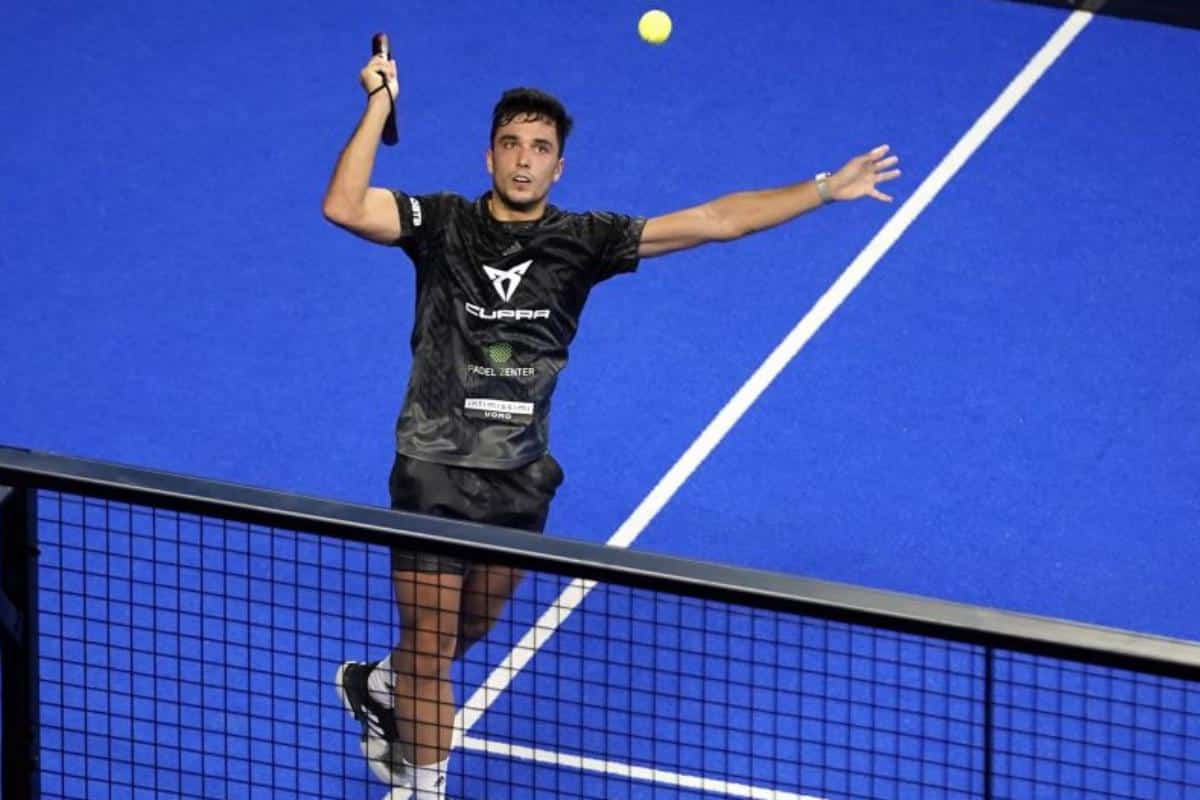
This complete training session breaks down the volley step-by-step to work on correct technique: racket preparation, pivot on the leg, weight transfer forward, and arm movement — for both forehand and backhand volleys. Across the 10 proposed progressions, players will work on all aspects of a proper volley…
The serve is often an under-trained shot, yet it’s fundamental for both beginner and advanced players. These 3 progressive exercises cover all the essential aspects of the serve…
This session includes 5 progressive drills designed to help players master the three-meter smash (also called out-of-the-court smash), while maintaining control and consistency. These exercises focus on body alignment, arm motion, contact point…